

A camping stove is so much more than just a piece of gear in your pack – it is the heart of your outdoor life. Think of it as your personal guarantee for a hot cup of coffee at sunrise or a fortifying dinner after a long and demanding hike. It is, quite simply, a reliable source of heat and energy when you need it most.
Why the camping stove will become your best friend in the wilderness
Imagine the camping stove as a Swiss Army knife for outdoor cooking. It is a smart, compact system with a single, vital purpose: to provide you with hot food and drink as efficiently as possible, regardless of where you set up camp. The entire construction is ingenious in its simplicity and solves one of the greatest challenges of outdoor life – the ability to quickly transform raw ingredients into much-needed energy.
A classic storm stove consists of three parts that work in perfect symbiosis:
- The burner: The engine of the system, which converts fuel into a controlled and adjustable flame.
- The windshield: The shield that protects the flame from whipping winds and cold, focusing the heat where it should be and reducing fuel consumption.
- The cookware: The tools, usually a couple of pots and perhaps a frying pan, designed to absorb heat quickly and efficiently.
Together, these parts create a bulletproof cooking station that won't let you down, even when the weather is at its worst. Without a good stove, you're limited to cold dishes or building a fire – which isn't always permitted, practical, or even possible.
A natural part of Swedish outdoor culture
The love for nature is deeply rooted in the Swedish soul, and the camping stove has played a central role in that relationship. It's no coincidence that one of the world's most iconic outdoor stoves, the Trangia, is a Swedish invention. The first prototype was launched back in 1951 – a revolutionary system where the burner, pots, and windshield could be packed into a single, quiet, and streamlined unit. This simple yet brilliant design quickly became a favorite for everyone from scouts and mountain hikers to ordinary families. Incredibly, it has looked essentially the same for over 70 years.
A reliable camping stove isn't just about food. It's about safety, comfort, and the mental boost a hot cup of tea can provide when the cold bites and darkness falls.
So much more than just cooking
Your camping stove is a true multi-tasker. On a chilly morning, the flame can warm frozen fingers. During a winter trip, the ability to melt snow into drinking water isn't just a convenience – it can be a matter of survival.
The stove also becomes the natural gathering point in camp, the place where you gather to plan tomorrow's leg or simply share the day's experiences. And in an emergency, it can be used to purify water. It is precisely this versatility that makes a good camping stove one of the most important investments you can make for your adventures.
Once the sun has gone down, good lighting is of course also important. To avoid fumbling in the dark, you can easily solve this with a modern and powerful camping lantern like the Nitecore LR70.
How to choose the right type of camping stove
Choosing a camping stove can feel like a complex science. But don't worry, it's simpler than it looks. Think of it like choosing the right tool for the job – a carpenter doesn't use the same saw for everything, and you need the right stove for your specific adventure.
Each type of stove has its own superpowers and weaknesses. By understanding them, you can make a smart choice that guarantees hot meals and an enjoyable atmosphere, whether you're alone in the mountains or on a road trip with the whole family.
Gas stoves – fast, convenient, and easy
For most people, the gas stove is the obvious choice today. And it's easy to see why. The ease of use is unbeatable: screw on the gas canister, turn the knob, and light it. In seconds, you have a powerful flame that is incredibly easy to adjust.
This makes the gas stove perfect for beginners or for those who just want everything to work without a fuss. The output is usually excellent, meaning water boils quickly and you don't have to wait forever for your food. They come in two main varieties:
- Top-mounted stoves: Ultra-light and compact models where the burner screws directly onto the gas canister. A dream for the hiker who counts every gram.
- Duo/remote-canister stoves: Here, the burner stands on its own legs and connects to the gas via a hose. This provides a much more stable base for larger pots and allows you to turn the canister upside down for better performance in cold weather.
This image captures the essence of what a camping stove actually is: a central point for heat, energy, and security when you're outdoors.
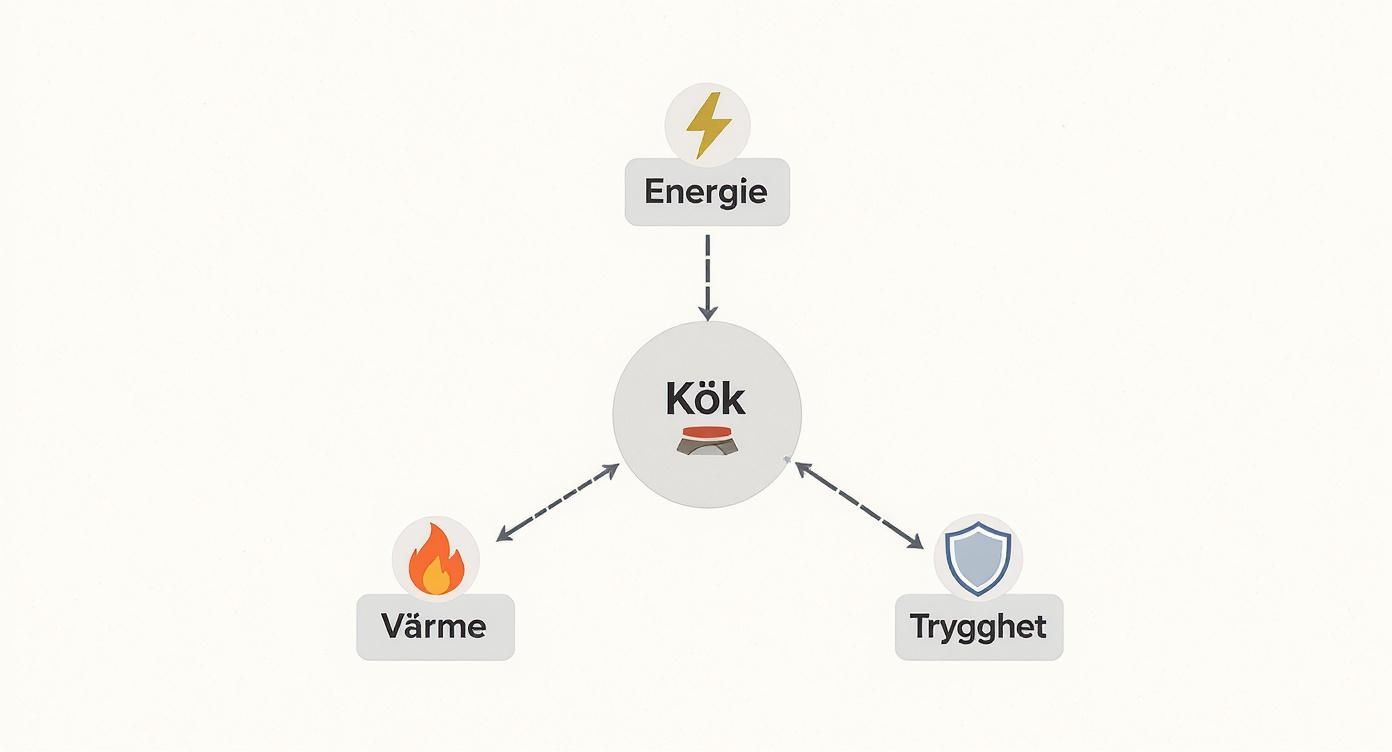
It's so much more than just a gadget for cooking. The stove is a fundamental piece of equipment that keeps you fed, warm, and safe.
Alcohol stoves – the reliable old workhorse
The alcohol stove, led by the classic Trangia, is a true icon in Swedish outdoor life. The entire construction is ingenious in its simplicity – there are no moving parts that can break. This rock-solid reliability has made it a favorite for scouts and hardened outdoor enthusiasts for decades.
The fuel, methylated spirits, is cheap and available to buy almost everywhere. Another major advantage is that alcohol stoves are completely silent, providing an incredibly peaceful cooking experience. The downside is that the power output is lower than a gas stove, so you'll need a bit more patience for your coffee water.
The alcohol stove's greatest strength is that it's completely hassle-free. It works. Always. Regardless of the weather and without any maintenance requirements. It is safety in its purest form.
Multifuel stoves – for the true globetrotter
The multifuel stove is the adventurer of the outdoor world. Just as the name suggests, it can run on a wide range of liquid fuels – white gas, kerosene, and even diesel if necessary. This flexibility makes it the obvious choice for expeditions and travel to remote locations where you can't rely on finding the right gas canister.
These stoves deliver brutal power and work flawlessly even in freezing cold, where gas can easily become temperamental. The flip side is that they are a bit more complicated. They must be preheated before starting and require regular maintenance, such as cleaning nozzles, to stay in top shape.
Wood stoves – for the ultimate natural feel
A wood stove, sometimes called a twig stove, uses nature's own pantry as fuel: small sticks, twigs, and pinecones. It is the most minimalist and sustainable option, as you don't have to carry any fuel at all. It provides an unbeatable sense of truly being at one with nature.
The design is often very clever, engineered to create efficient combustion with high heat from just a small handful of wood. The downsides? You are dependent on finding dry fuel, it can be difficult to get a fire going in the rain, and pots will get sooty. Most importantly – it cannot be used when fire bans are in place.
Comparison of fuel types for camping stoves
To make it easier to see the differences, we've compiled a table. This table compares the most common fuel types based on key characteristics to help you choose the right one for your adventure.
| Fuel Type | Advantages | Disadvantages | Best for |
|---|---|---|---|
| Gas | Extremely easy to use, clean, fast | Can be expensive, poorer performance in cold, empty canisters | Beginners, weekend trips, when convenience is key |
| Alcohol | Reliable, silent, cheap and accessible fuel | Lower power (slower), can produce some soot | Hiking, scouting, when reliability is everything |
| Multifuel | High power, works great in cold weather, fuel available everywhere | Loud, requires maintenance, complicated | Winter trips, expeditions, travel in remote areas |
| Wood | Free fuel, light pack, cozy factor | Requires dry wood, soot, not during fire bans | Bushcraft, when you want to carry minimal weight |
Take a look at the table and think about what is most important to you. Is it simplicity, weight, cold-weather performance, or flexibility? The answer will guide you to the right stove.
How to choose the right camping stove for your needs
Finding the perfect camping stove is less about finding the "best" one on the market and more about finding the best stove for you. The choice is deeply personal and depends entirely on the type of adventure you're planning.
Think of it like choosing shoes. You wouldn't hike the Kungsleden in flip-flops, right? Similarly, you need a stove built for the task.
To make things a bit simpler, let's look at two classic Swedish outdoor types.
Meet Anna the hiker
Anna is going on a week-long solo hike in Sarek. For her, every gram in the backpack is sacred. Her priorities are crystal clear: low weight and minimal pack volume. She needs an efficient camping stove that quickly boils water for freeze-dried food and won't fail her when temperatures drop below zero.
For Anna, a top-mounted gas stove or an advanced multifuel stove is the obvious choice. The weight is minimal and the power, measured in watts, is high.
What does wattage mean? Think of watts like the horsepower in a car engine. A higher wattage (often around 2000–3000 W) means the stove can produce more heat, making a liter of water boil significantly faster. For Anna, this means less time at the stove and more time enjoying the view.
Meet the Svensson family
The Svensson family – two adults, two children – love to take the car and camp along the coast. Their needs are the exact opposite of Anna's. Weight doesn't matter since everything goes in the car anyway. Instead, stability and safety are key. They need a robust stove that stands firm and doesn't risk tipping over when the kids are playing nearby.
For the Svensson family, a classic alcohol stove like a Trangia or a larger two-burner stove is perfect. They are built to be stable, easy to use, and capable of cooking "real" food. Their stove becomes a social hub where they can fry pancakes in the morning.
Crucial factors to consider
When faced with the choice, ask yourself these questions to narrow down what you need:
- Weight and pack size: Will the stove be carried in a backpack for several days? Then every gram matters. Look for lightweight materials like titanium or aluminum and minimalist designs.
- Power and boil time: Is it important that food is ready quickly? After a long day's hike, a high-power stove (high wattage) is worth its weight in gold. But remember, a good windshield is often more important than raw power – it ensures the heat stays where it belongs.
- Weather conditions: Will you be cooking in cold and wind? Gas performs worse as temperatures drop, while multifuel and alcohol stoves are more reliable in winter climates. An integrated windshield is a must for Swedish conditions.
- Ease of use: How much time do you want to spend on preparation and maintenance? Gas stoves are extremely simple. Multifuel stoves require a bit more knowledge and tinkering.
The choice of camping stove has gone hand in hand with the Swedish love for camping. As early as the 60s, outdoor cooking became easier when Primus launched its classic blue two-burner gas stove, a sight that evokes nostalgia for many. This development reflects how campsites grew from simple tent meadows to full-fledged holiday resorts, placing higher demands on equipment. Learn more about Swedish camping history at Hemtrevligt.se.
Today, there are also modern solutions for powering your gear. For those who want to be completely independent of the power grid, an ultra-light and portable solar panel can be a smart addition for charging power banks and electronics. By carefully considering your personal needs, you can easily find the perfect camping stove that will be a faithful companion on countless future adventures.
Using your camping stove safely and efficiently
Owning a nice camping stove is one thing, but actually handling it safely and smartly out in the wild is another. It's about building good habits so that cooking becomes a safe and enjoyable part of the adventure – not a source of stress.
Once you master the basics, you'll get the most out of your stove while avoiding unnecessary risks.
The first step, every time, is finding a good spot. Look for a flat and stable surface, completely free of dry grass, leaves, and anything else that can catch fire. A bare rock or a patch of sand is worth its weight in gold. This minimizes the risk of the whole setup tipping over, which is one of the most common causes of accidents.
Creating the right conditions for the stove
Once you've found your spot, it's time to think about the wind. A windshield isn't an unnecessary gadget – it's crucial for both safety and how efficiently the stove works.
Without protection, the wind will steal tons of heat. Result? Longer boil times and fuel consumption that skyrockets. Most system stoves, like the classic Trangia, have an integrated windshield, but for a top-mounted gas stove, a separate, foldable shield can be a really smart investment.
The lighting itself also requires some finesse. Whether you're running on gas, alcohol, or multifuel, make sure you have full control. With a gas stove, turn the valve gently until you hear a faint hissing sound before lighting. With an alcohol stove, fill the burner to a maximum of two-thirds to avoid burning liquid splashing out.
Using a camping stove is about having respect for fire. Understand its power, protect it from the elements, and never give it a chance to spread. A small flame can become a big danger if not handled correctly.
The invisible dangers you must know
The single biggest risk with a camping stove isn't the flame you see. It's the invisible and odorless gas carbon monoxide (CO). This insidious gas is formed when combustion is incomplete, which easily happens in spaces with poor ventilation.
Cooking inside a tent or a closed vestibule is therefore extremely dangerous and something you must avoid at all costs.
Carbon monoxide poisoning can lead to unconsciousness and, in the worst case, death without you even noticing something is wrong. Therefore, always ensure you cook outdoors or in a vestibule with maximum ventilation, where fresh air can flow through. Never leave a lit stove unattended.
Proper fuel handling is another pillar of safety.
- Check connections: Always double-check that the gas canister is correctly screwed on and that nothing is leaking.
- Store fuel smartly: Keep extra fuel bottles and gas canisters at a safe distance from the stove and other heat sources.
- Transport with care: Ensure all caps and valves are properly closed when packing fuel in your backpack.
Checklist for safe cooking
By quickly going through a simple checklist every time, you'll fast-track safe routines. It only takes a minute but can prevent most accidents.
- Stable surface: Is the stove level and steady?
- Clear surroundings: Is there anything flammable nearby?
- Windshield in place: Is the flame protected from the wind?
- Good ventilation: Are you cooking in an open space?
- Extra fuel: Is it placed at a safe distance?
- Full supervision: Are you watching the stove at all times?
If an accident should occur, act calmly. If the stove tips over, immediately turn off the fuel if you can. For a small fire on the ground, you can often smother the flames with sand, soil, or a damp cloth. If you're car camping, it's never a bad idea to bring a small fire extinguisher or a fire blanket just in case.
Tips for smarter packing and better outdoor food
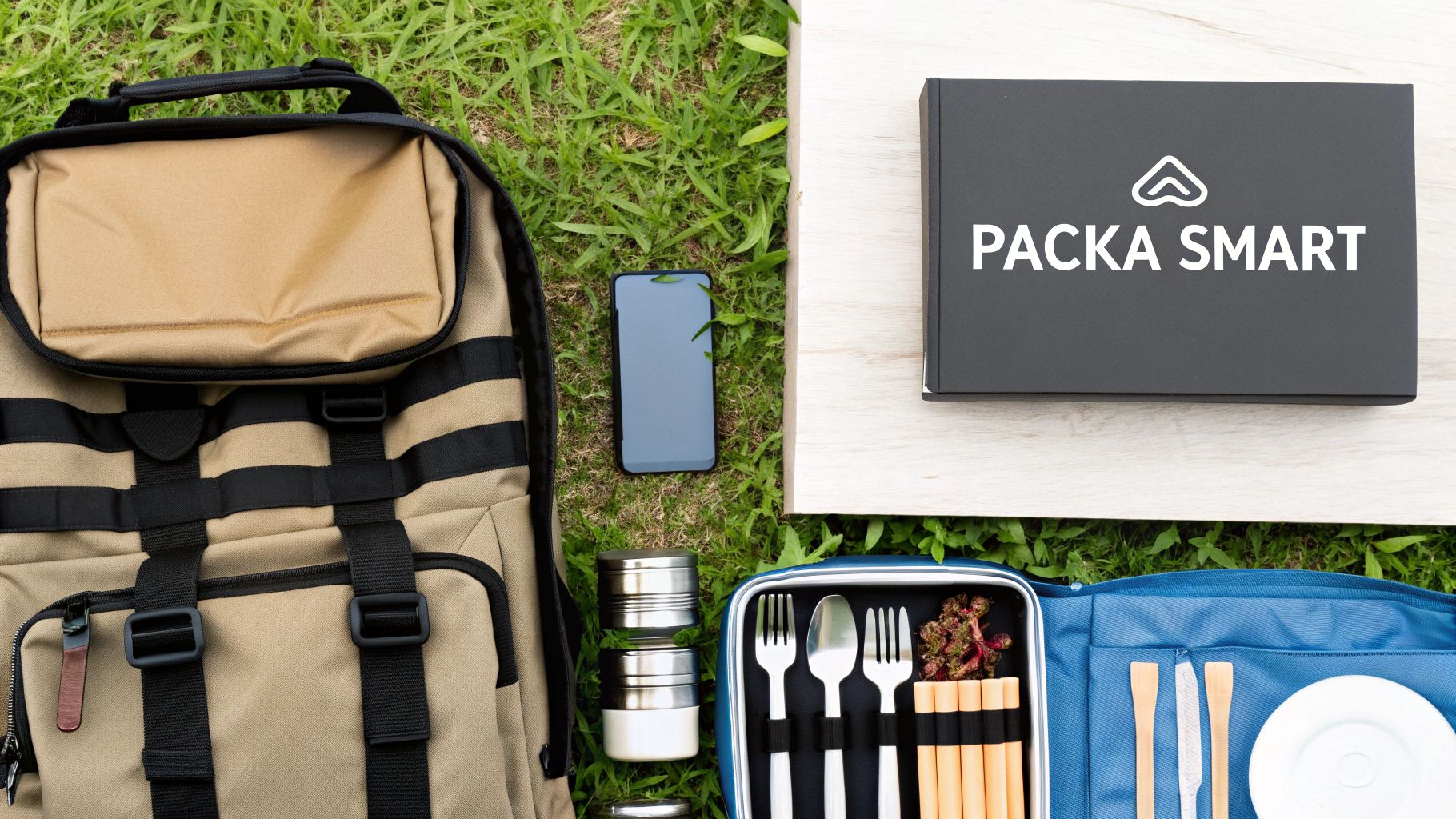
Having a good camping stove is one thing, but the real magic happens when you learn to pack smart and plan your food. With a few simple tricks, you can transform cooking from a chore into one of the highlights of the adventure. The goal is a complete outdoor kitchen that is quiet, efficient, and always ready.
The first step toward a quieter kitchen? Eliminate the rattle. Nothing ruins the peace of nature like the sound of metal against metal in your backpack. The solution is simple: pack a small dishcloth between the pots. This not only protects non-stick surfaces but also muffles all that irritating noise.
Create your ultimate cooking kit
To truly be efficient, think one step beyond just the stove and build a dedicated "cooking kit." This is simply a small, separate stuff sack where you gather all those small but indispensable items. The idea is to have everything together so you don't have to tear apart your entire backpack when hunger strikes.
A well-stocked kit might include:
- Ferrocerium rod or storm lighter: Always more reliable than matches that can get damp.
- Spices in mini jars: Fill small, airtight containers with salt, pepper, and your favorite blends.
- A foldable ladle or spatula: Takes up minimal space but makes a huge difference.
- Biodegradable dish soap: A small bottle lasts surprisingly long.
- A small sponge or scraper: Makes cleanup a breeze.
By having everything organized, you save not only time but also mental energy. It's a small detail that elevates the whole experience. A multi-tool, like a multi-function survival shovel, is also a staple companion that handles everything from digging a fire pit to opening cans.
A smartly packed outdoor kitchen is all about preparation. By thinking through the details at home, you can relax and fully enjoy yourself once you're on site.
Swedish camping culture has exploded, and interest in outdoor life is greater than ever. With record numbers of 16.7 million guest nights at the country's campsites, convenient equipment like a well-packed camping stove is becoming increasingly important. The trend has roots in the post-war era, when the number of cars in Sweden increased from 50,000 in 1945 to over two million in the 70s. This paved the way for car-based camping trips and created a whole new need for practical equipment. You can read more about the evolution of camping life at Bohusläns Museum.
Simple recipes for great taste experiences
Once your gear is ready, it's time for the fun part: the food. Freeze-dried is convenient, but cooking real food outdoors doesn't have to be complicated. The trick is to focus on "one-pot meals" that minimize both cleanup and fuel consumption.
Think dishes where everything is cooked in the same pot: a creamy pasta with pesto and sun-dried tomatoes, a hearty lentil stew with coconut milk and curry, or why not a simple but flavorful risotto? Prepare as much as you can at home – chop vegetables, measure out pasta, and mix spices in advance.
A personal favorite is a quick couscous salad. Boil water, pour it over the couscous in a bowl, and let it absorb under a lid. Then mix in goodies like diced feta cheese, olives, chopped bell peppers, and a splash of olive oil. A nutritious and delicious lunch that's ready in minutes – perfect for a hiking break.
Care and maintenance – ensuring your stove lasts for years
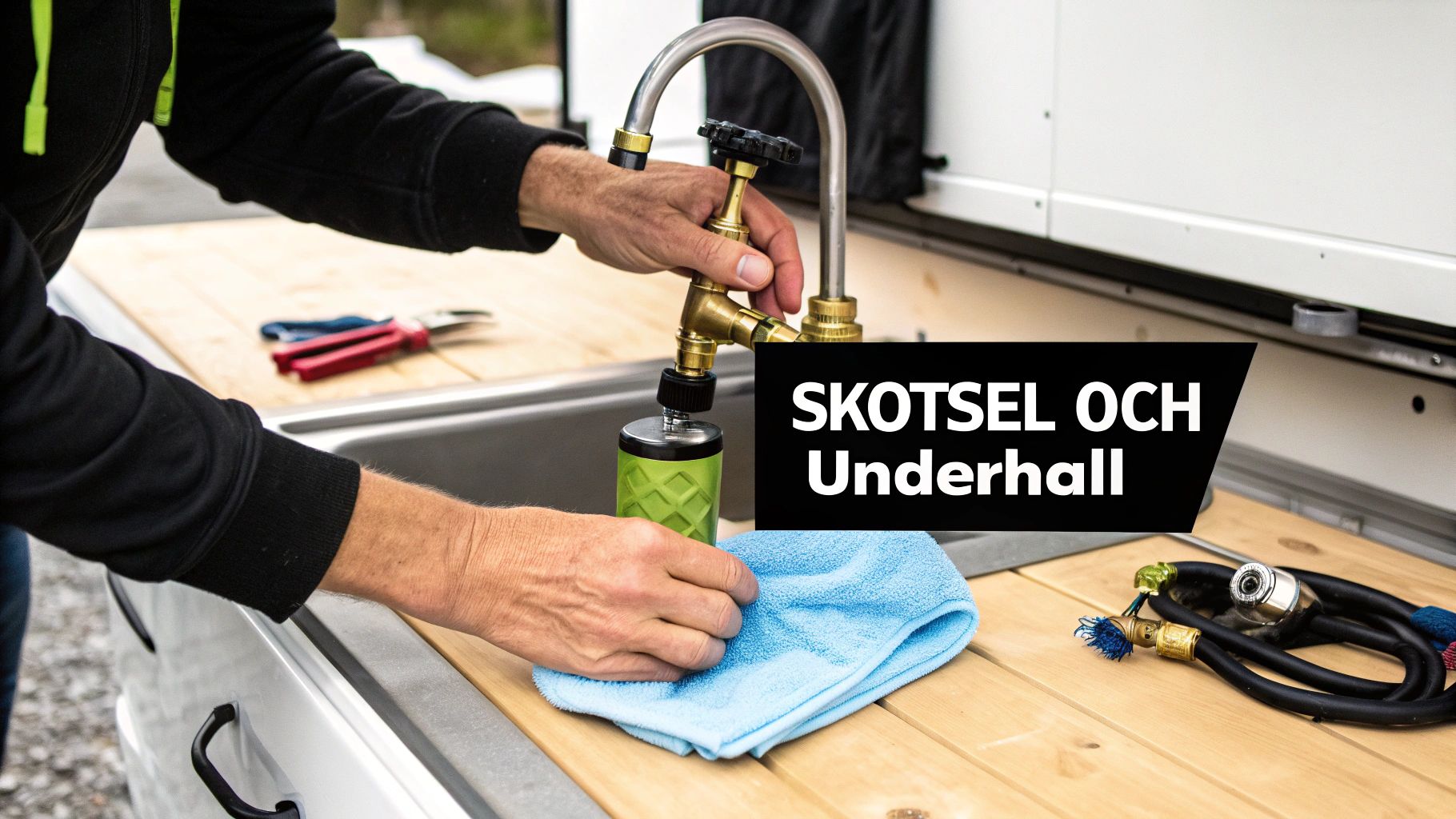
A well-maintained camping stove is more than just a tool. It is a faithful companion that delivers heat and energy when you need it most. Giving the stove a few minutes of love after every trip is the best investment you can make so that it functions flawlessly, year after year.
By getting to know your specific stove – whether it's a simple alcohol burner or an advanced multifuel stove – you can easily avoid the most common faults, such as a flickering flame or a refusal to light. Multifuel stoves in particular, with their many moving parts, benefit from a little extra care to continue performing at their peak.
Cleaning after every adventure
Regardless of what type of stove you use, thorough cleaning is paramount. Soot and food residues can quickly clog nozzles and reduce efficiency. Make it a habit, and it will be quick and easy.
- Alcohol stove: The burner easily gets sooty. Wipe it out with a cloth or some paper and ensure the small holes along the edge are clean for an even, nice flame.
- Gas stove: Here, the burner head is the focus. Ensure it is free from food spills that can block the gas flow. A small brush gets the job done quickly.
- Multifuel stove: These require a bit more attention. Clean the fuel line and use the included cleaning needle to keep the nozzle open. Soot from preheating can build up quickly.
To clean your stove easily in the field, disinfecting and cleaning wipes can be a smart thing to have in your pack.
Troubleshooting when things go wrong
Even the best stove can be temperamental sometimes. Being able to find and solve the most common problems right on management is an invaluable skill that can save dinner. Luckily, the solution is often simpler than you think.
The single most common reason a camping stove loses power is a clogged nozzle. Learn how to clean it, and you've solved 90% of all future problems.
Here are some typical scenarios and how to fix them:
- Uneven or pulsing flame (gas/multifuel): Almost always a sign of a clogged nozzle. Turn off the fuel and use the cleaning needle to gently clear the small hole.
- Stove won't light (all types): Start with the most obvious – do you have enough fuel? Is the valve open? For gas stoves, check that the canister is properly screwed on.
- Low power (gas): If it's cold outside, the pressure in the gas canister can drop. Warm it for a while with your hands or in your sleeping bag. Never use an open flame to heat the canister!
- Leakage (gas/multifuel): Turn off the fuel immediately. Check all gaskets and O-rings – they dry out over time and need replacing. Always carry a spare set in your pack.
Quick answers to common questions about camping stoves
Here I've gathered some of the most common questions I encounter regarding camping stoves. Think of it as a small cheat sheet to quickly solve problems and avoid making classic mistakes on your trip.
How much fuel do I need for a week?
This is a classic! A good rule of thumb for gas stoves is to budget roughly 100 grams of gas per person per day if you're cooking breakfast and dinner in the summer. For a week-long solo hike, a 230-gram canister is usually plenty, but I always throw in an extra 100-grammer just in case – you never know.
For alcohol stoves, a good starting point is about 1 liter of methylated spirits per person per week.
Which stove is best for winter camping?
When the cold bites, multifuel stoves running on white gas are vastly superior. They are reliable and perform excellently in freezing temperatures where gas easily loses pressure. A remote-canister gas stove where you can flip the canister upside down also works well, as does a trusty alcohol stove.
A common mistake many make is relying on their standard top-mounted gas stove in freezing temperatures. The pressure in the gas canister drops quickly in the cold, which at best yields a weak and ineffective flame – in the worst case, the stove won't start at all.
Can I bring gas canisters on a flight?
The answer is a short and clear no. It is strictly forbidden to pack gas canisters, methylated spirits, or other flammable fuels, whether in checked or carry-on luggage. Instead, plan to buy fuel once you arrive at your destination.
The stove itself is usually allowed, but ensure it is sparkling clean and completely free of fuel residue.
At ActionKing, you'll find everything you need for your outdoor life, from powerful headlamps to smart accessories that make your adventure both easier and safer. Explore our range and prepare for your next trip at https://actionking.se.


