

Ein Karabiner ist eigentlich nur eine Metallschlaufe mit einem cleveren, federbelasteten Schnapper. Aber dieses kleine Teil ist ein echter Problemlöser, der Ihre Ausrüstung schnell und sicher verbindet. Er fungiert als entscheidendes Bindeglied für alles – egal, ob Sie eine Action-Kamera am Rucksack befestigen oder beim Klettern lebenswichtige Seile sichern wollen.
Was ist ein Karabiner eigentlich?
Betrachten Sie den Karabiner als den stillen, zuverlässigen Helden Ihrer Ausrüstung. Er ist eine kleine, aber entscheidende Komponente, an der buchstäblich alles hängen kann. Anstatt nur ein Stück Metall zu sehen, denken Sie daran als ein spezielles und tragbares Schloss für Ihre Geräte, Seile und Gurte. Der ganze Sinn dahinter ist, eine superstarke und sichere Verbindung zu schaffen, die gleichzeitig kinderleicht zu öffnen und zu schließen ist, wann immer Sie es wünschen.
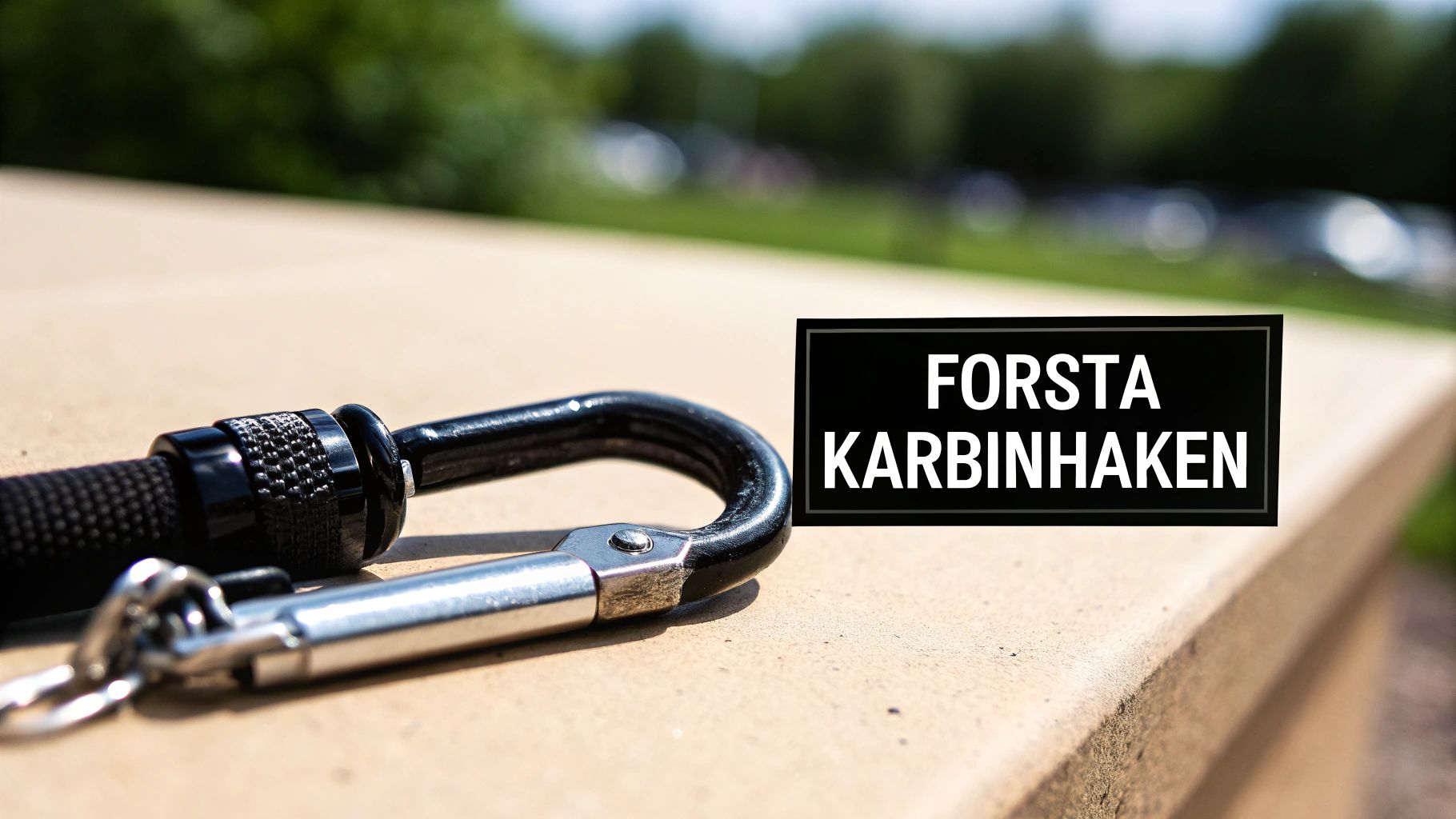
Die grundlegende Anatomie eines Karabiners
Um zu verstehen, wie er funktioniert, müssen wir uns nur drei Hauptteile ansehen. Jeder Teil hat eine klare Aufgabe, die zum Ganzen beiträgt.
- Der Körper (Spine): Dies ist das "Rückgrat" – der größte und stärkste Teil des Karabiners. Das gesamte Gewicht und die Belastung sollten idealerweise entlang dieses Teils liegen, damit er am stärksten ist.
- Der Schnapper (Gate): Die bewegliche Öffnung, die Sie hineindrücken, um ein Seil oder Ausrüstung zu befestigen. Bei einfacheren Modellen ist er nur federbelastet, während sicherere Varianten eine Verriegelung haben, die auf- oder zugeschraubt oder eingerastet wird.
- Die Nase (Nose): Der Teil des Körpers, an dem der Schnapper im geschlossenen Zustand einhakt. Wie die Nase gestaltet ist, spielt eine große Rolle dabei, zu verhindern, dass sich Seile oder Schlingen unerwartet verfangen.
Das Zusammenspiel dieser drei Teile hat den Karabiner unverzichtbar gemacht. Das Prinzip ist dasselbe, egal ob es sich um einen einfachen Nitecore Karabiner aus Titan für Schlüssel oder ein fortschrittliches, abschließbares Modell zum Klettern handelt.
Stellen Sie es sich so vor: Der Körper ist der Türrahmen, der Schnapper ist die Tür und ein eventueller Verriegelungsmechanismus ist das Schloss, das sicherstellt, dass die Tür geschlossen bleibt, wenn es windig ist. Zusammen schaffen sie einen sicheren Durchgang für Ihre Ausrüstung.
Wenn Sie diese grundlegende Anatomie verstanden haben, haben Sie den ersten Schritt getan, um das richtige Modell für Ihre Abenteuer auswählen zu können. Im nächsten Abschnitt werden wir uns seine etwas unerwartete Herkunft ansehen.
Die unerwartete Reise des Karabiners vom Kavallerie zum Kletterfelsen
Man könnte meinen, der Karabiner, dieses selbstverständliche Teil in der Ausrüstung jedes Kletterers und Outdoor-Enthusiasten, hätte schon immer auf den Berg gehört. Aber die Wahrheit ist eine ganz andere. Seine Geschichte beginnt tatsächlich auf dem Schlachtfeld und ist eine faszinierende Reise von militärischer Notwendigkeit zu einem lebensrettenden Werkzeug am Felsen.
Alles steckt im Namen. "Karabinerhaken" (Karabinhake) stammt direkt von der Waffe "Karabiner" ab – einem kürzeren, handlicheren Gewehr, das perfekt für berittene Soldaten war. Aber das Kavallerie hatte ein Problem: Wie befestigt man schnell seine Waffe am Sattel, wenn jede Sekunde im Eifer des Gefechts zählt? Die Lösung war ebenso einfach wie genial – eine kleine Metallschlaufe mit einem federbelasteten Schnapper, die es ermöglichte, das Gewehr mit einer Hand zu befestigen oder zu lösen.
Der allererste Karabiner war also nicht dazu gedacht, das Gewicht eines Menschen zu tragen. Er war für Schnelligkeit und Zuverlässigkeit in einer angespannten Situation konzipiert, um die Waffenhandhabung für Reiter zu erleichtern.
Diese historische Verbindung enthüllt die wahre DNA des Karabiners: Effizienz, Einfachheit und Sicherheit unter rauen Bedingungen.
Vom Sattel zur Felswand
Der Schritt vom Schlachtfeld zur Felswand war kein Nacht-und-Nebel-Aktion. Aber die Pioniere des Kletterns erkannten schnell das Potenzial einer solch schnellen und sicheren Verbindung. Sie begannen, das Design an ihre eigenen, lebenswichtigen Bedürfnisse anzupassen. Die frühesten Modelle waren oft schwer und klobig, aus Stahl gefertigt, aber die Entwicklung schritt schnell voran.
Die Jagd nach leichteren und stärkeren Materialien trieb die Innovation voran. Bald ersetzten Aluminiumlegierungen den schweren Stahl, was das Gewicht drastisch reduzierte, ohne die Festigkeit zu beeinträchtigen. Für einen Kletterer, bei dem jedes Gramm auf einer langen Tour zählt, war das eine Revolution. Diese Entwicklung legte den Grundstein für den modernen, vielseitigen Karabiner, den wir heute verwenden – ein unverzichtbarer Teil jeder modernen Wanderausrüstung.
Tatsächlich lebt die militärische Verbindung bis heute fort, besonders in Schweden. In den 1960er Jahren wurden Sturmgewehre wie das AK4 Standard in den Streitkräften, was das Wort "Karabiner" in der schwedischen Militärtradition zementierte und damit auch die Verbindung zum Haken selbst.
Wenn Sie also jedes Mal einen Karabiner einklicken, halten Sie tatsächlich ein Stück Geschichte in der Hand. Ein Werkzeug, das durch jahrzehntelange Innovation verfeinert wurde, von den Bedürfnissen des Kavallerie nach Schnelligkeit bis zu den Anforderungen des Kletterns an lebensrettende Festigkeit. Ziemlich cool, oder?
Die Wahl des richtigen Karabiner-Typs für Ihren Zweck
Vor einer ganzen Wand voller Karabiner zu stehen, kann schnell überwältigend sein. D-förmig, oval, birnenförmig, Schraubverschluss, Twist-Lock... die Liste der Begriffe ist lang. Aber keine Sorge, die richtige Wahl zu treffen, bedeutet eigentlich nur, die Form und den Verschluss des Karabiners auf die anstehende Aufgabe abzustimmen. Betrachten Sie es wie die Auswahl des richtigen Werkzeugs aus dem Werkzeugkasten – Sie würden ja auch keinen Hammer zum Eindrehen einer Schraube verwenden.
Der Prozess der Auswahl des richtigen Karabiners hat tatsächlich eine ziemlich lange Geschichte. Von den Bedürfnissen des Militärs nach schneller und sicherer Ausrüstung bis zu den strengen Anforderungen des Kletterns an lebensrettende Festigkeit haben all diese Faktoren die heutigen Designs geprägt.
Diese historische Reise zeigt, wie jedes Detail für einen bestimmten Zweck verfeinert wurde, und genau mit dieser Denkweise sollten Sie auch Ihre eigene Ausrüstung auswählen.
Drei Grundformen, die die meisten Aufgaben lösen
Jede Form ist clever so konzipiert, dass sie Belastungen auf eine bestimmte Weise handhabt. Wenn Sie einmal die Logik dahinter verstanden haben, wird es kinderleicht zu wissen, welchen Sie wählen sollten.
- D-förmig: Dies ist die stärkste und vielseitigste Form, die Sie finden können. Der Grund? Sie hat eine gerade "Rückseite" (Spine), auf die fast die gesamte Kraft einwirkt, was die Stärke maximiert. Sie ist eine ausgezeichnete Wahl für die meisten Situationen, in denen Sie eine starke und leichte Verbindung benötigen.
- Oval: Die klassische, völlig symmetrische Form. Sie ist nicht ganz so stark wie ein D-förmiger Karabiner, aber ihre gleichmäßigen Kurven sorgen dafür, dass die Last gleichmäßig auf beide Seiten verteilt wird. Das ist perfekt, wenn sich die Ausrüstung nicht seitlich verschieben darf, z. B. bei der Verwendung von Blöcken und Taljen.
- Birnenförmig (HMS): Erkennbar an ihrer großen, breiten Öffnung. Dieser Karabiner ist speziell für das Sichern und Abseilen mit einer Bremsvorrichtung konzipiert. Die breite Fläche lässt das Seil frei laufen und reduziert das Risiko, dass es unnötig eingeklemmt oder abgerieben wird.
Eine einfache Faustregel: Betrachten Sie den D-förmigen Karabiner als Ihr zuverlässiges Arbeitstier für alle möglichen Zwecke. Der HMS-Karabiner ist der Spezialist, den Sie hervorholen, wenn Sie Seile unter Last handhaben müssen.
Verriegeln oder nicht verriegeln? Das ist die Frage
Ein Verriegelungsmechanismus ist Ihre zusätzliche Lebensversicherung. Er verhindert, dass der Schnapper versehentlich geöffnet wird, z. B. durch Vibrationen oder wenn er an einer Felskante reibt. Die Verriegelung ist absolut entscheidend in allen Situationen, in denen ein Missgeschick schwerwiegende Folgen haben kann. Denken Sie an Klettern, Aufhängen der Hängematte oder Sichern schwerer Lasten.
Hier sind die gängigsten Verschlussarten:
- Schraubverschluss (Screw-lock): Die einfachste Variante. Sie schrauben manuell eine Hülse über den Schnapper. Zuverlässig und robust, aber Sie müssen daran denken, ihn zuzuschrauben.
- Twist-lock: Eine automatische Verriegelung, die zum Öffnen zwei Bewegungen erfordert – eine Drehung und ein Drücken. Schnell und einfach mit nur einer Hand zu bedienen.
- Triple-Action: Die absolut sicherste Art. Sie erfordert drei separate Bewegungen (oft Heben, Drehen, Drücken), was bedeutet, dass sie praktisch nie versehentlich geöffnet werden kann.
Für weniger kritische Aufgaben, wie das Anhängen einer Wasserflasche oder das Organisieren von Gegenständen am Rucksack, ist ein Karabiner ohne Verriegelung völlig ausreichend. Aber für alles andere ist ein Karabiner mit Verriegelung die einzig richtige Wahl. Viele verwenden zum Beispiel eine taktische Lanyard mit Karabiner, um Schlüssel und kleine Werkzeuge zu organisieren – ein perfektes Beispiel für einen nicht-kritischen, aber sehr praktischen Anwendungsbereich.
Vergleich verschiedener Karabiner-Typen
Um ein klareres Bild zu geben, haben wir eine Tabelle zusammengestellt, die die gängigsten Typen vergleicht. Diese Übersicht hilft Ihnen, schnell zu erkennen, welche Form und welcher Verschluss am besten zu Ihren spezifischen Bedürfnissen passt.
| Karabiner-Typ (Form/Verschluss) | Hauptanwendungsbereich | Vorteile | Nachteile |
|---|---|---|---|
| D-förmig (ohne Verriegelung) | Befestigung von Ausrüstung, Organisation | Am stärksten im Verhältnis zum Gewicht, vielseitig | Schnapper kann unbeabsichtigt geöffnet werden |
| Oval (ohne Verriegelung) | Verwendung mit Blöcken & Taljen, Racken | Symmetrisch, verhindert Verschiebung | Schwächer und schwerer als D-förmig |
| Birnenförmig / HMS | Seilbremse, Sichern, Abseilen | Große Öffnung, einfache Seilhandhabung | Größer und schwerer als andere Formen |
| Schraubverschluss | Sichern, Ankerpunkte, Allround | Zuverlässig, einfacher Mechanismus, friert selten ein | Langsamer zu handhaben, kann unverschlossen bleiben |
| Twist-lock / Auto-Lock | Sichern, persönliche Sicherheit (Via Ferrata) | Schnell, selbstarretierend, einfach mit einer Hand zu bedienen | Kann mit Handschuhen schwieriger sein, komplexer |
| Triple-Action | Professioneller Einsatz, maximale Sicherheit | Extrem sicher gegen versehentliches Öffnen | Kann schwierig schnell zu handhaben sein |
Die richtige Wahl zu treffen ist also keine Raketenwissenschaft, wenn man sie aufschlüsselt. Indem Sie über Stärke, Form und Sicherheit nachdenken, finden Sie schnell den perfekten Karabiner für Ihr nächstes Abenteuer.
So interpretieren Sie Materialien und Sicherheitskennzeichnungen
Wenn die Sicherheit von einem kleinen Metallteil abhängt, gibt es keinen Raum für Vermutungen. Die Kennzeichnungen auf einem Karabiner sind nicht nur zufällige Zahlen und Symbole – sie sind ein Zeugnis, das schwarz auf weiß genau angibt, was er aushält. Diese Informationen lesen zu können, ist der Unterschied zwischen einer sicheren Wahl und einer unnötigen Risikobereitschaft.
Alles beginnt mit dem Material. Die gängigsten Optionen sind Aluminium und Stahl, eine Entscheidung, die alles von Gewicht und Festigkeit bis zum Preis beeinflusst. Ein Karabiner aus Aluminium ist federleicht und ein Muss beim Klettern oder Wandern, wo jedes Gramm zählt. Stahl hingegen ist schwerer und deutlich widerstandsfähiger, was ihn zur offensichtlichen Wahl für industrielle Anwendungen oder feste Ankerpunkte macht, wo die Verschleißfestigkeit wichtiger ist als das Gewicht.
Verstehen Sie die Stärke hinter den Zahlen
Die absolut wichtigste Kennzeichnung auf einem sicherheitszertifizierten Karabiner ist seine Bruchfestigkeit, angegeben in Kilonewton (kN). Das mag technisch klingen, aber das Prinzip ist eigentlich recht einfach. Ein Kilonewton (1 kN) entspricht ungefähr der Kraft, die benötigt wird, um 100 kg zu heben.
Denken Sie so: Ein Karabiner mit der Kennzeichnung 24 kN kann theoretisch einem statischen Gewicht von etwa 2.400 kg standhalten. Das ist also so viel wie ein normal großer Pkw – eine absolut unglaubliche Stärke für ein Teil, das in Ihre Handfläche passt.
Der Grund, warum die Zahl so hoch ist, liegt darin, dass ein Sturz dynamische Kräfte erzeugt, die weit über Ihr Körpergewicht hinausgehen. Die Kennzeichnung ist also eine Garantie dafür, dass der Karabiner den plötzlichen Rucken standhält, die auftreten können.
Die drei entscheidenden Festigkeitswerte
Wenn Sie sich die Seite eines zertifizierten Karabiners genauer ansehen, erkennen Sie drei verschiedene Festigkeitswerte, oft mit kleinen Pfeilen illustriert. Diese zeigen die Belastbarkeit in drei völlig unterschiedlichen Situationen, und die Unterschiede sind enorm.
- Entlang des geschlossenen Schnappers: Dies ist der höchste Wert (z. B. 24 kN) und repräsentiert die maximale Festigkeit des Karabiners. Genau so ist er für die Verwendung konzipiert – mit der Belastung entlang des langen, starken Rückens.
- Quer (Minor Axis): Wenn sich der Karabiner um 90 Grad dreht und seitlich belastet wird, sinkt die Festigkeit dramatisch, oft auf etwa 7–10 kN. Eine gefährliche Situation, die vermieden werden muss.
- Entlang des offenen Schnappers: Dies ist die absolut schwächste Situation. Wenn der Schnapper aus irgendeinem Grund nicht vollständig geschlossen oder verriegelt ist, sinkt die Festigkeit auf etwa das gleiche niedrige Niveau wie bei seitlicher Belastung, also etwa 7–10 kN.
Diese Informationen unterstreichen, wie lebenswichtig es ist, einen Karabiner immer richtig zu belasten und zu überprüfen, ob der Schnapper vollständig geschlossen und verriegelt ist.
Interessanterweise hat das Wort Karabiner militärische Wurzeln, wo das schwedische Sturmgewehr 4 (AK4) lange Zeit ein treuer Diener der Streitkräfte war. Aber die Sicherheitsmargen beim Klettern und Outdoor sind mindestens genauso rigoros wie bei der schwedischen Militärausrüstung.
Für einfachere Aufgaben, wie das Befestigen eines Apple AirTag am Rucksack, sind die Anforderungen natürlich ganz anders. Dann ist eine Sicherheitsklassifizierung unnötig, und eine praktische Silikonhülle mit Karabiner passt perfekt.
Pflegehinweise und häufige Fehler, die es zu vermeiden gilt
Auch der robusteste Karabiner ist nur so sicher, wie Sie ihn verwenden und pflegen. Die häufigsten Fallstricke zu kennen, ist das A und O, um unangenehme Überraschungen zu vermeiden, wenn es wirklich darauf ankommt. Betrachten Sie Ihre Ausrüstung als Investition in Ihre Sicherheit – ein wenig Wissen und Pflege sorgen dafür, dass sie deutlich länger hält.
Einer der schwerwiegendsten Fehler, die Sie machen können, ist, einen Karabiner über eine scharfe Kante zu belasten. Dies erzeugt einen extremen Bruchpunkt, der die Festigkeit dramatisch reduziert, weit unter dem angegebenen kN-Wert. Ebenso gefährlich ist es, ihn mit offenem oder unverschlossenem Schnapper zu belasten. Wie wir bereits gesehen haben, kann die Festigkeit um über 60 % sinken.
Vermeiden Sie diese häufigen Fehler
Sich dieser Szenarien bewusst zu sein, ist der erste Schritt zu sichereren Abenteuern. Denken Sie immer zweimal darüber nach, wie Ihr Karabiner im System positioniert ist.
- Falsche Belastung (Cross-loading): Vermeiden Sie um jeden Preis, den Karabiner seitlich, über die kurze Achse zu belasten. Jede Last sollte entlang des starken "Rückens" liegen, damit er hält, was er verspricht.
- "Nose-hooking": Lassen Sie niemals zu, dass das Seil oder die Schlinge sich in der Nase des Karabiners verhakt. Dies kann verhindern, dass der Schnapper vollständig schließt und setzt das gesamte System einem unnötigen Risiko aus.
- Falscher Typ für die Aufgabe: Verwenden Sie niemals einen leichten Accessoire-Karabiner für etwas, das Gewicht tragen muss. Sie sind nicht auf Sicherheit getestet und können unerwartet versagen.
So pflegen Sie Ihre Ausrüstung
Regelmäßige Inspektion und Reinigung sind das A und O. Ein schmutziger oder schwergängiger Karabiner ist ein unsicherer Karabiner – so einfach ist das.
Machen Sie es sich zur Gewohnheit, Ihre Ausrüstung nach jedem Abenteuer zu überprüfen. Fünf Minuten Pflege können einen Unfall verhindern und stellen sicher, dass Ihre Ausrüstung für die nächste Herausforderung bereit ist.
Waren Sie in einer schmutzigen oder salzigen Umgebung unterwegs? Spülen Sie Ihre Ausrüstung mit Süßwasser ab und lassen Sie sie vollständig an der Luft trocknen. Wenn der Schnapper schwergängig ist, können ein paar Tropfen silikonbasiertes Schmiermittel Wunder wirken. Wischen Sie überschüssiges Mittel danach sorgfältig ab.
Das Wichtigste ist die visuelle Inspektion. Achten Sie auf Risse, tiefe Kerben, Verformungen oder Anzeichen extremer Abnutzung – besonders nach einem Sturz. Wenn Sie auch nur den geringsten Schaden entdecken, ist es an der Zeit, den Karabiner sofort außer Betrieb zu nehmen. Ihre Sicherheit ist es nicht wert, ein Risiko einzugehen.
Häufig gestellte Fragen zu Karabinern
Hier beantworten wir einige der häufigsten Fragen rund um Karabiner. Betrachten Sie dies als eine schnelle Anleitung, um Unklarheiten bezüglich Wartung, Verwendung und dem Unterschied zwischen verschiedenen Modellen auszuräumen.
Wann ist es Zeit, meinen Karabiner auszutauschen?
Ein Karabiner sollte sofort ausgetauscht werden, wenn er einen schweren Sturz erlebt hat, auch wenn Sie mit bloßem Auge keine Schäden sehen können. Sie sollten ihn auch regelmäßig auf Risse, tiefe Kratzer oder Rostspuren untersuchen. Wenn der Schnapper oder die Verriegelung klemmt oder nicht richtig schließt, ist dies ebenfalls ein klares Zeichen dafür, dass es Zeit für einen neuen ist.
Zögern Sie nie, einen Karabiner auszusondern, wenn Sie sich auch nur im Geringsten unsicher fühlen. Ihre Sicherheit hat immer Priorität, und ein neuer Karabiner ist eine sehr günstige Lebensversicherung.
Kann ich einen billigen Schlüsselring-Karabiner für meine Hängematte verwenden?
Absolut nicht. Das ist eine wirklich schlechte Idee. Diese kleinen Karabiner, die als Zubehör oder Schlüsselanhänger verkauft werden, sind nicht dafür gebaut oder getestet, nennenswertes Gewicht zu tragen. Sie können bei überraschend geringer Belastung brechen.
Wenn Sie eine Hängematte oder etwas anderes aufhängen möchten, das das Gewicht einer Person tragen soll, müssen Sie einen Karabiner verwenden, der für das Klettern oder eine entsprechende Belastung zugelassen ist. Achten Sie immer auf die Kennzeichnung, die die Stärke in Kilonewton (kN) angibt – sie ist immer in echte, zertifizierte Karabiner eingraviert.
Was ist eigentlich der Unterschied zwischen einem HMS-Karabiner und einem D-förmigen?
Ein HMS-Karabiner ist an seiner birnenförmigen Gestalt mit einem breiteren Bogen am einen Ende erkennbar. Dieses Design ist perfekt zum Abseilen und Sichern mit einer Bremsvorrichtung, da es dem Seil erlaubt, reibungslos und ohne Hängenbleiben zu gleiten.
Ein D-förmiger Karabiner ist dagegen meist stärker im Verhältnis zu seinem Gewicht. Die Form hilft, die Last auf die starke Rückseite des Karabiners zu lenken, was ihn zu einer ausgezeichneten Wahl für die meisten anderen Situationen macht, in denen Sie Dinge sicher verbinden müssen.
Bei ActionKing finden Sie eine große Auswahl an zuverlässiger Ausrüstung und Zubehör für Ihre Abenteuer. Schauen Sie sich unser gesamtes Sortiment an und finden Sie die Produkte, die genau zu Ihnen passen, auf https://actionking.se.


